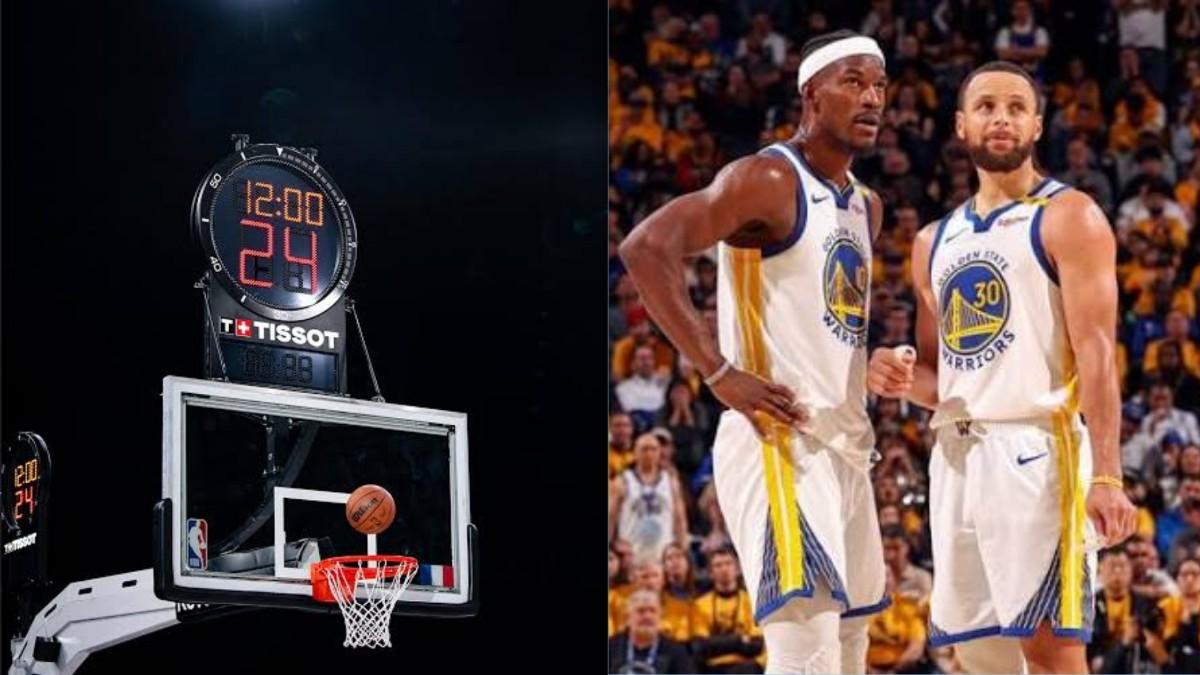
An NBA game lasts 48 minutes of regulation play, split into four 12-minute quarters. But if you’ve ever watched one from tip-off to the final buzzer, you know the real answer is closer to 2 to 2.5 hours.
Timeouts, fouls, halftime, commercial breaks, and replay reviews all stretch the clock well beyond those 48 minutes on the scoreboard.
So what takes a 48-minute game and turns it into a two-plus-hour event? And how does the NBA compare to college basketball, the WNBA, and international play? I’ve dug into the timing rules, broadcast data, and league operations to give you a complete picture. This article covers quarter lengths, halftime breaks, overtime rules, and the factors that make some games drag past three hours.
How Long Is Each Quarter in an NBA Game?
Each NBA quarter runs 12 minutes on the game clock. That’s longer than any other major basketball league in the world. The WNBA and FIBA (the international governing body) both use 10-minute quarters, and NCAA men’s basketball doesn’t use quarters at all. It runs two 20-minute halves instead.
Here’s a quick comparison of regulation playing time across leagues:
| League | Format | Quarter/Half Length | Total Game Clock |
|---|---|---|---|
| NBA | 4 Quarters | 12 minutes | 48 minutes |
| WNBA | 4 Quarters | 10 minutes | 40 minutes |
| FIBA | 4 Quarters | 10 minutes | 40 minutes |
| NCAA Men’s | 2 Halves | 20 minutes | 40 minutes |
| NCAA Women’s | 4 Quarters | 10 minutes | 40 minutes |
| High School | 4 Quarters | 8 minutes | 32 minutes |
The NBA’s 12-minute quarters are part of what makes its games the longest in basketball. Those extra 8 minutes of game clock compared to FIBA or the WNBA add up, especially when you factor in all the stoppages that come with them.
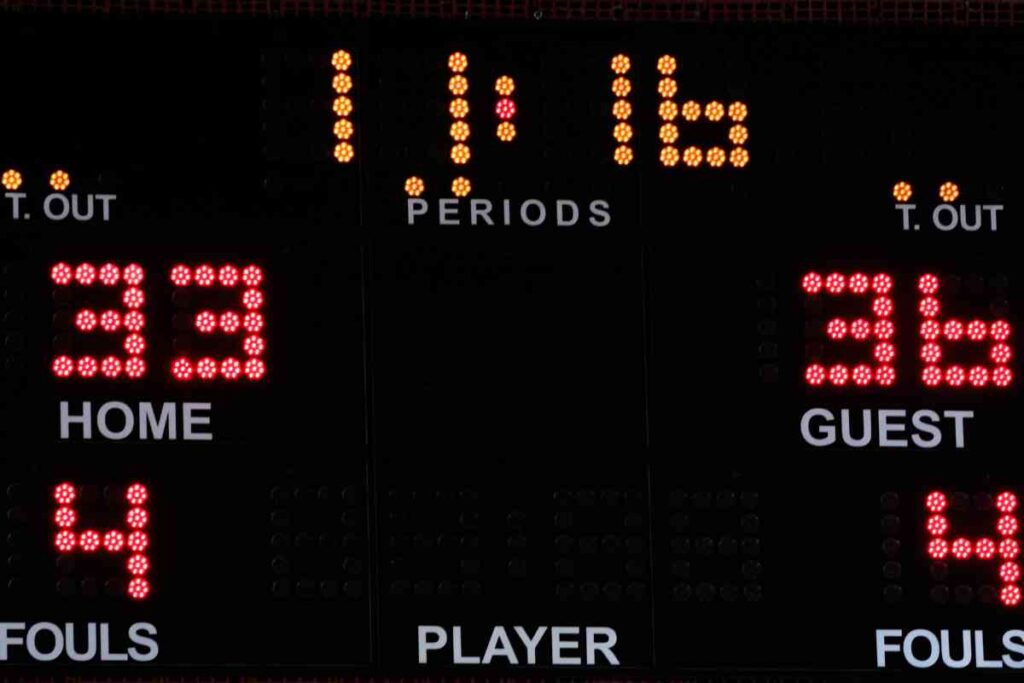
Between the first and second quarters (and the third and fourth), there’s a short break of about 130 seconds. The big break comes at halftime, which sits between the second and third quarters and lasts 15 minutes during the regular season.
Why Do NBA Games Last So Much Longer Than 48 Minutes?
The game clock only runs when the ball is live. Every time a foul is called, the ball goes out of bounds, a team calls timeout, or officials review a play, the clock stops. These stoppages are the main reason a 48-minute game takes over two hours in real time.
Here are the biggest time-eaters:
Timeouts are a huge factor. Each NBA team gets 7 timeouts per game, and every single one lasts 75 seconds. That’s a potential 14 timeouts per game, adding up to 17.5 minutes of timeout time alone. The NBA cut the total from 18 timeouts per game down to 14 starting in the 2017-18 season. That move came after the league found that the ends of games felt choppy and drawn out.
On top of team timeouts, the NBA schedules mandatory TV timeouts in every quarter. These kick in after the first stoppage under the 7-minute and 3-minute marks of each period. For nationally televised games, the first two TV timeouts in each quarter run 3 minutes and 15 seconds. Locally broadcast games get slightly shorter breaks at 2 minutes and 45 seconds.
Fouls and free throws also eat into the clock. Every personal foul stops play, and shooting fouls mean free throws, where the clock stays frozen while players line up and shoot. A high-foul game can add 15 to 20 extra minutes of real time.
Instant replay reviews have become more common in recent years. The league’s Coach’s Challenge system lets teams contest certain calls, and officials also conduct mandatory reviews in late-game situations. Each review can take anywhere from one to three minutes.
Add it all up, and you get a regular-season game that typically runs between 2 hours and 2 hours 30 minutes from start to finish.
How Long Is Halftime in the NBA?
Halftime in the NBA lasts 15 minutes during the regular season. It sits between the second and third quarters and gives teams a chance to rest, regroup, and adjust their game plans.
For fans in the arena, halftime often features entertainment like performances, fan contests, or giveaways. During marquee events like the NBA All-Star Game or the NBA Finals, halftime can stretch a bit longer due to special performances and extended broadcast segments.
I’ve watched plenty of regular-season games where halftime felt like a quick breather. But during the Finals? You’re looking at halftime stretching closer to 20 minutes with all the added production.
How Long Is Overtime in the NBA?
When teams are tied at the end of the fourth quarter, the game goes to overtime. Each overtime period lasts 5 minutes of game clock time. If the score is still tied after the first OT, they play another one. And another. There’s no limit to how many overtime periods can be played.
Each team also gets 2 additional timeouts per overtime period, regardless of how many they had left from regulation. The same stoppage rules apply, so a single overtime period can add about 8 to 10 minutes of real time.
In practice, most games that go to overtime wrap up after one extra period. A single-overtime game typically lasts around 2 hours and 35 minutes total. Double-overtime games push toward 2 hours and 55 minutes, and anything beyond that starts creeping past the three-hour mark.
The Longest Games in NBA History
Multiple overtimes are rare, but they happen. And when they do, games can go on for a long time. Here are the longest NBA games ever played by total game clock time:
| Rank | Game | Date | Overtimes | Game Time | Final Score |
|---|---|---|---|---|---|
| 1 | Indianapolis Olympians vs. Rochester Royals | January 6, 1951 | 6 OT | 78 minutes | 75-73 (Olympians) |
| 2 | Anderson Packers vs. Syracuse Nationals | November 24, 1949 | 5 OT | 73 minutes | 125-123 (Nationals) |
| 3 | Milwaukee Bucks vs. Seattle SuperSonics | November 9, 1989 | 5 OT | 73 minutes | 155-154 (Bucks) |
| 4 | Chicago Bulls vs. Atlanta Hawks | March 1, 2019 | 4 OT | 68 minutes | 168-161 (Bulls) |
| 5 | Portland Trail Blazers vs. Denver Nuggets | May 3, 2019 | 4 OT | 68 minutes | 140-137 (Blazers) |
The all-time record belongs to that 1951 game between the Olympians and Royals. Six overtimes. 78 minutes of game clock. And the final score was just 75-73 because this was before the NBA introduced the 24-second shot clock. Two of those six overtime periods were completely scoreless. The whole event lasted over four hours in real time.
The Bucks-Sonics game from 1989 is the longest game in the modern shot-clock era. Dale Ellis of the SuperSonics played 69 minutes in that game, which remains the record for most minutes played in a single NBA game. That one lasted about four and a half hours from tip to finish.
NBA Regular Season vs. Playoff Game Length
Playoff games run noticeably longer than regular-season games. There are a few reasons for that.
First, nationally televised playoff games have longer commercial breaks. The league and broadcasters build in extra ad inventory for the postseason, which means each TV timeout runs longer.
Second, playoff games tend to be closer and more competitive. Tighter scores in the fourth quarter lead to more intentional fouls, more timeouts, and more replay reviews. All of that extends the clock.
Third, coaches manage timeouts more carefully in the playoffs. They save them for crunch time, which creates clusters of stoppages in the final minutes that slow the game to a crawl.
| Game Type | Average Duration |
|---|---|
| Regular Season | ~2 hours 15 minutes |
| Playoffs | ~2 hours 25 minutes |
| NBA Finals | ~2 hours 30 minutes or more |
| Single Overtime (any game) | ~2 hours 35 minutes |
| Double Overtime | ~2 hours 55 minutes |
If you’ve ever noticed the final two minutes of a close playoff game taking 20-plus real-time minutes, you’re not imagining things. I’ve seen fourth quarters in the Finals stretch past 45 minutes because of the constant start-and-stop rhythm.
What Factors Affect the Length of an NBA Game?
Not every NBA game takes the same amount of time. Several variables push games shorter or longer:
Number of fouls is the biggest swing factor. A game with lots of fouls means more free throws, more stoppages, and more time. A cleanly played game with few whistles moves much faster.
Pace of play matters too. Teams that push the ball up the floor quickly and take early shot-clock shots burn through game time faster than teams that grind the clock down on every possession.
Replay reviews can add unpredictable time. A game with three or four challenged calls might lose 10 extra minutes to reviews. A game with zero challenges will move noticeably quicker.
Blowouts vs. close games play a role as well. In a blowout, the fourth quarter moves fast because neither team calls timeouts, intentional fouls don’t happen, and coaches empty their benches. Close games are the opposite. Every possession matters, so both teams use every timeout and strategic stoppage available.
Broadcast type also impacts timing. Nationally televised games on networks like ESPN or TNT have longer commercial windows than locally broadcast games. That difference can add 5 to 10 minutes to the total broadcast time.
How Does an NBA Game Compare to Other Sports?
Basketball is actually one of the shorter major sports when it comes to total event time. Here’s how an average NBA game stacks up:
| Sport | Average Event Duration |
|---|---|
| NBA Basketball | ~2 hours 15 minutes |
| NFL Football | ~3 hours 12 minutes |
| MLB Baseball | ~2 hours 40 minutes |
| NHL Hockey | ~2 hours 30 minutes |
| Soccer (MLS/UEFA) | ~2 hours |
The NBA has worked hard to keep its games tight. Commissioner Adam Silver has spoken publicly about the league’s focus on pace and flow, and the 2017 timeout reforms were a direct result of that effort. The average regular-season game dropped from about 2 hours 23 minutes to roughly 2 hours 15 minutes after those changes took effect.
Conclusion: An NBA Game Is 48 Minutes on the Clock but Over 2 Hours in Real Life
Here’s the bottom line. An NBA game has 48 minutes of regulation play across four 12-minute quarters. But between timeouts, fouls, halftime, TV breaks, and replay reviews, the average game runs about 2 hours and 15 minutes in real time. Playoff games push that closer to 2.5 hours, and overtime games can blow past three hours.
The longest NBA game ever played lasted 78 minutes of game time across six overtimes back in 1951. That’s an extreme case, but it shows how far the clock can stretch when teams can’t be separated.
If you’re planning your schedule around watching an NBA game, I’d budget at least 2 hours and 20 minutes for a regular-season broadcast. For playoff games or nationally televised matchups, give yourself closer to 2.5 to 3 hours. And if it goes to overtime? Settle in and grab some snacks.