
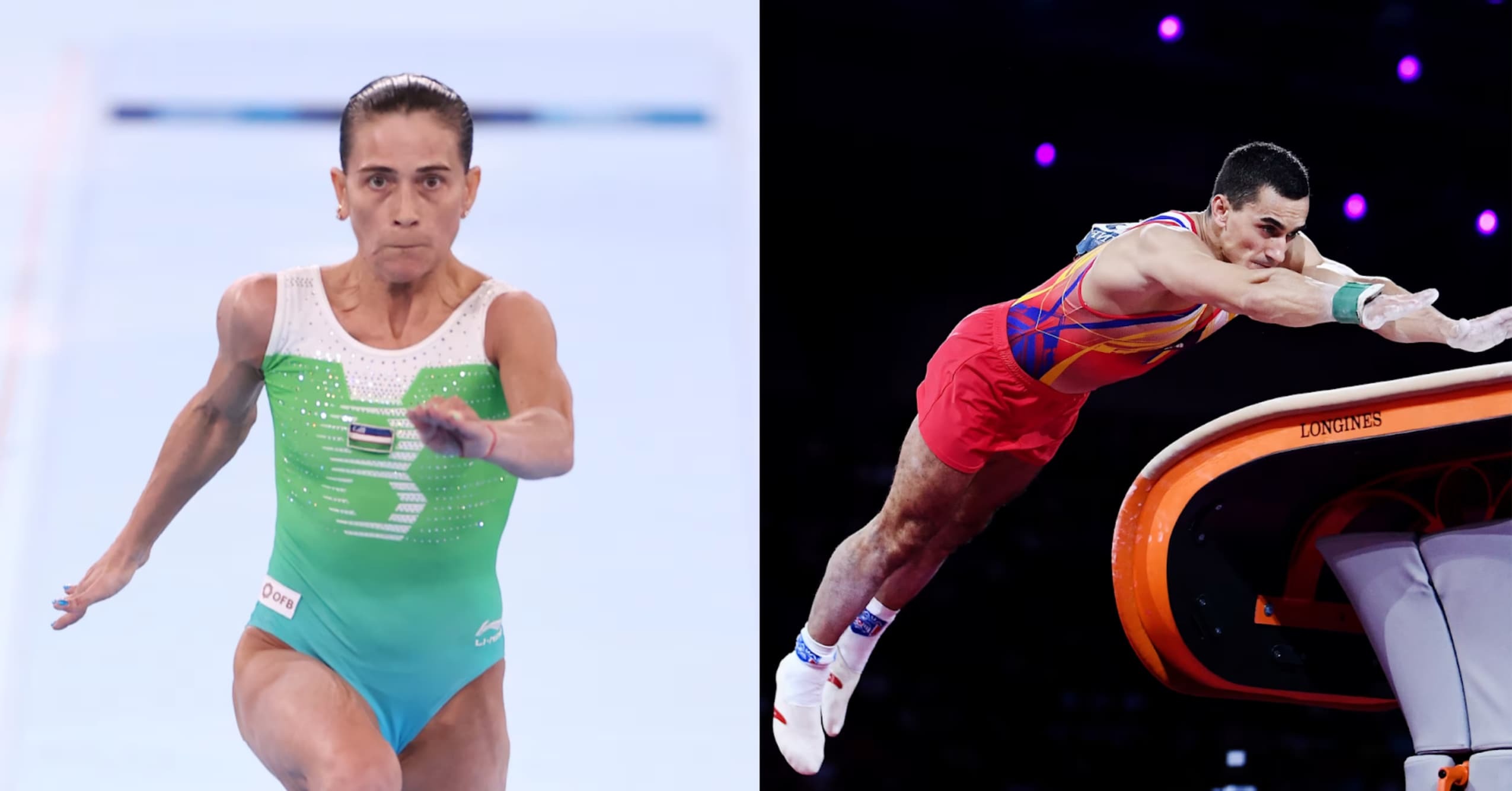
Oksana Chusovitina competed at the Tokyo 2020 Olympics at age 46, making her the oldest gymnast in Olympic history. She represented Uzbekistan in her eighth straight Games. Most of her rivals were not born when she first competed in 1992.
Gymnasts typically retire before age 25. The physical demands of the sport push most athletes out early. That makes this list special. These ten athletes ignored the clock, fought through injuries, and took on competitors half their age.
This article ranks every gymnast who competed at an advanced age in the Olympics, with verified career stats and updated records through 2026.
Top 10 Oldest Olympic Gymnasts: Quick Overview
| Rank | Name | Country | Age at Last Olympics | Olympic Appearances | Key Achievement |
|---|---|---|---|---|---|
| 1 | Oksana Chusovitina | Uzbekistan/Germany | 46 | 8 (1992-2020) | Oldest Olympic gymnast ever, Guinness World Record holder |
| 2 | Heikki Savolainen | Finland | 44 | 5 (1928-1952) | Oldest gymnastics medalist, 9 Olympic medals |
| 3 | Marian Dragulescu | Romania | 40 | 5 (2000-2020) | 8x World Champion, vault and floor |
| 4 | Yordan Yovtchev | Bulgaria | 39 | 6 (1992-2012) | 6 straight Olympics, 4 Olympic medals |
| 5 | Anton Fokin | Uzbekistan | 33 | 2 (2008, 2016) | Olympic bronze, parallel bars specialist |
| 6 | Vlasios Maras | Greece | 33 | 4 (2004-2016) | 2x World Champion, horizontal bar |
| 7 | Yuri van Gelder | Netherlands | 33 | 1 (2016) | World Champion, rings specialist |
| 8 | Harutyun Merdinyan | Armenia | 33 | 1 (2016) | European gold, 23-year career span |
| 9 | Ri Se-gwang | North Korea | 31 | 1 (2016) | Olympic vault gold, oldest champion since 1968 |
| 10 | Larisa Latynina | Soviet Union | 29 | 3 (1956-1964) | 18 Olympic medals, all-time female record for 48 years |
(Last Updated: 3 July 2026)
Sources: Olympics.com, Wikipedia, Guinness World Records, International Gymnastics Federation (FIG)
Each gymnast on this list pushed past what the sport considers “old.” The sections below cover their careers in full detail.
1. Oksana Chusovitina (Uzbekistan/Germany): Age 46
| Category | Detail |
|---|---|
| Born | June 19, 1975 |
| Age at Last Olympics | 46 (Tokyo 2020) |
| Olympic Appearances | 8 (1992, 1996, 2000, 2004, 2008, 2012, 2016, 2020) |
| Discipline | Vault specialist |
| Olympic Medals | Team gold (1992), vault silver (2008) |
| World Championship Medals | 11 total, including 3 individual golds |
| Status | Still competing at age 50 (as of 2025) |
Sources: Olympics.com, Guinness World Records, Snopes
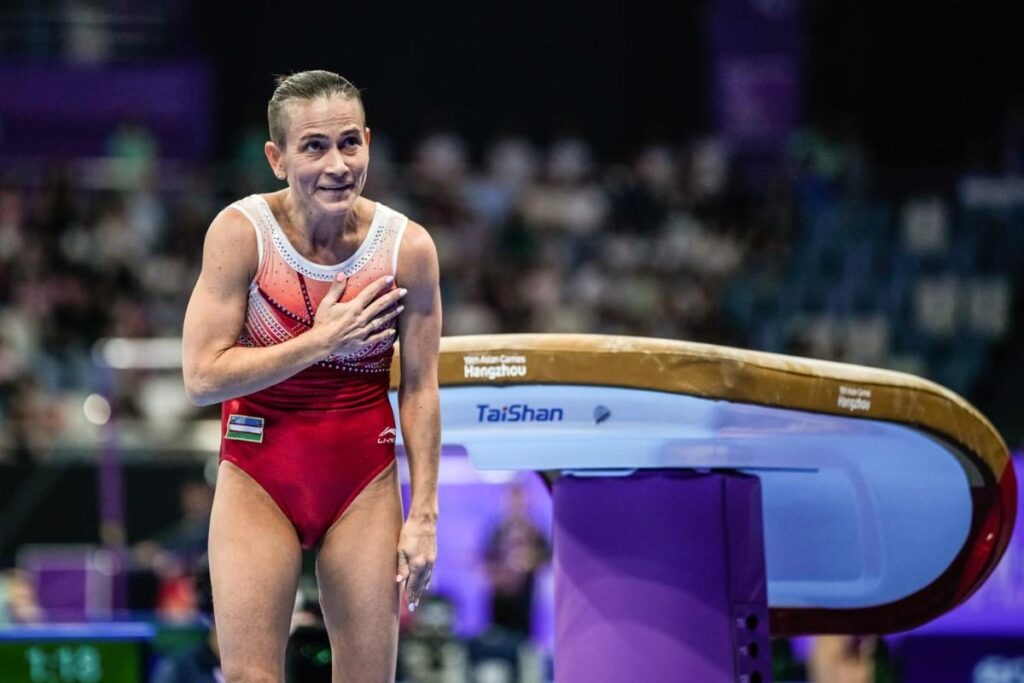
Oksana Chusovitina owns the record for the oldest Olympic gymnast in history. She first competed at the Barcelona 1992 Games as a teenager and won team gold with the Unified Team. She took the vault runway for the last time (so far) at age 46 in Tokyo.
Her career took a dramatic turn in 2002. Her son Alisher received a diagnosis of acute lymphocytic leukemia. The family moved to Germany for treatment. Chusovitina started competing for the German national team and won a vault silver medal at the 2008 Beijing Olympics.
She switched back to Uzbekistan in 2013 and competed at two more Games. At Tokyo 2020, fellow competitors and coaches gave her a standing ovation after her final vault. Simone Biles asked her for a photo. Biles was not born when Chusovitina first appeared at the Olympics.
Here is the most remarkable part: she has not stopped. At age 50, she won a silver medal on vault at a World Challenge Cup in Tashkent in June 2025. She now runs a free gymnastics academy in Tashkent for young athletes. Her goal is to compete at the 2028 Los Angeles Olympics at age 53. If she makes it, she will become a nine-time Olympian.
I have covered hundreds of athlete comebacks over the years. None of them compare to what Chusovitina keeps doing. She holds five named skills in the FIG Code of Points and the Guinness World Record for the most Olympic appearances by any gymnast.
2. Heikki Savolainen (Finland): Age 44
| Category | Detail |
|---|---|
| Born | September 28, 1907 |
| Died | November 29, 1997 |
| Age at Last Olympics | 44 (Helsinki 1952) |
| Olympic Appearances | 5 (1928, 1932, 1936, 1948, 1952) |
| Discipline | All-around, pommel horse |
| Olympic Medals | 9 total (2 gold, 1 silver, 6 bronze) |
| Career Span | 24 years |
Sources: Olympics.com, Olympedia, International Gymnastics Hall of Fame
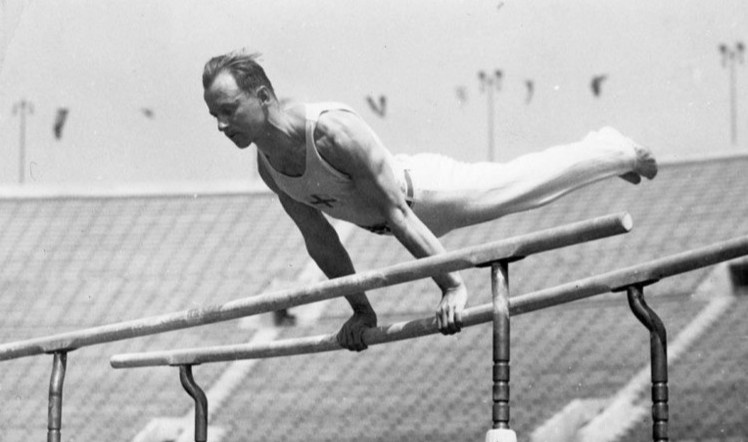
Heikki Savolainen proved that longevity in gymnastics was possible long before modern sports science existed. His Olympic career stretched 24 years, from 1928 to 1952. He won at least one medal at every Games he attended.
World War II cancelled the 1940 and 1944 Olympics. Without that gap, Savolainen would have competed in seven Games instead of five. He came back after the war anyway. At the 1948 London Olympics, he shared the pommel horse gold medal with two teammates at age 40.
Four years later, organizers chose him to deliver the Olympic Oath at the Helsinki 1952 opening ceremony. He then helped Finland win team bronze at age 44, making him the oldest gymnastics medalist in Olympic history. That record stood for decades.
Savolainen also earned a Doctor of Medicine degree in 1939 and ran a military hospital during Finland’s Winter War. He served as vice-president of the Finnish Gymnastics Federation for 13 years. The International Gymnastics Hall of Fame inducted him in 2004.
3. Marian Dragulescu (Romania): Age 40
| Category | Detail |
|---|---|
| Born | December 18, 1980 |
| Age at Last Olympics | 40 (Tokyo 2020) |
| Olympic Appearances | 5 (2000, 2004, 2008, 2016, 2020) |
| Discipline | Vault and floor |
| Olympic Medals | Silver (floor, 2004), bronze (vault, 2004), bronze (team, 2004) |
| World Championship Golds | 8 (floor: 2001, 2002, 2006, 2009; vault: 2001, 2005, 2006, 2009) |
| European Championship Golds | 10 |
Sources: Olympics.com, FIG, Wikipedia
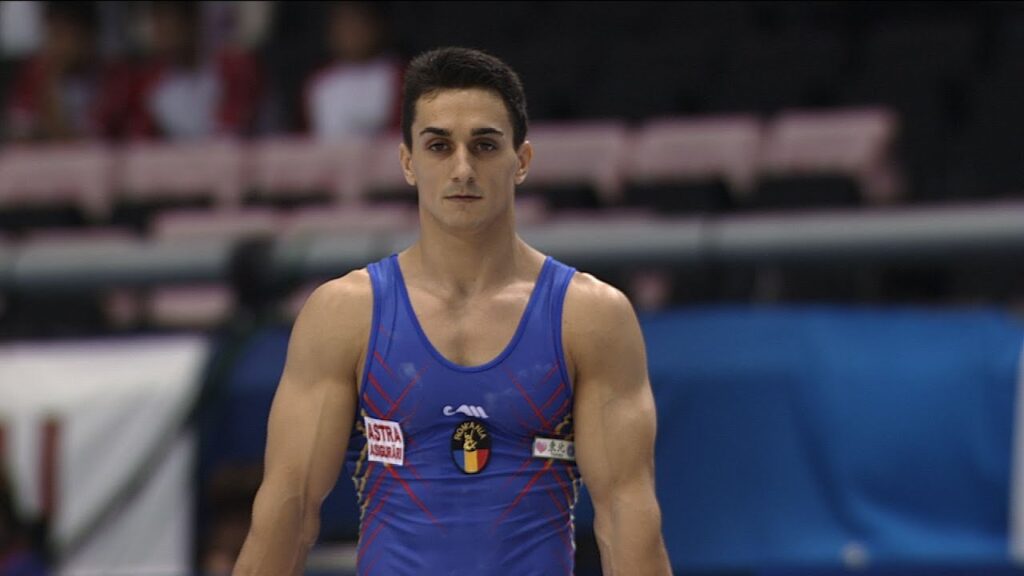
Marian Dragulescu is one of the most explosive vault and floor gymnasts in history. The “Dragulescu vault” (a handspring double front somersault with half turn) remains one of the hardest vaults any male gymnast performs today. No woman has ever attempted it.
He collected three Olympic medals at Athens 2004. But Olympic gold always slipped away. At Athens, he fell on his second vault after scoring 9.9 on his first. At Beijing 2008, he fell again. In Rio 2016, he tied for bronze and lost on a tiebreaker.
Dragulescu competed at the Tokyo 2020 Games at 40 years and 227 days old. He placed 16th on vault. No gold, but five Olympic Games across two decades speak for themselves.
His trophy case tells the full story: 8 World Championship golds and 10 European Championship golds. He even won European gold on floor in 2017 at age 36, years after multiple retirements and comebacks. Few gymnasts at any age can match that.
4. Yordan Yovtchev (Bulgaria): Age 39
| Category | Detail |
|---|---|
| Born | February 24, 1973 |
| Age at Last Olympics | 39 (London 2012) |
| Olympic Appearances | 6 (1992, 1996, 2000, 2004, 2008, 2012) |
| Discipline | Rings and floor |
| Olympic Medals | Silver (rings, 2004), bronze (floor, 2000), bronze (rings, 2000), bronze (floor, 2004) |
| World Championship Golds | 4 (floor and rings, 2001 and 2003) |
Sources: Olympics.com, Wikipedia, Bulgarian National Radio
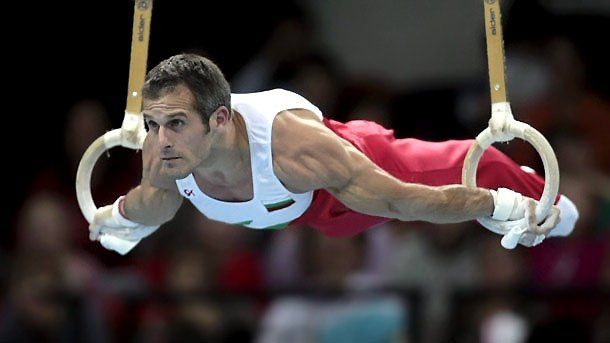
Yordan Yovtchev competed in six straight Olympic Games from 1992 to 2012. No other Bulgarian athlete has matched that. He was also the first male gymnast to reach six consecutive Games.
He debuted as a teenager at Barcelona 1992 and finished 55th. After Atlanta 1996, he moved to the United States to train. That decision launched the best stretch of his career. He won bronze medals on rings and floor at Sydney 2000. He followed that with a silver on rings and another floor bronze at Athens 2004.
The 2004 rings result still stings. Many believe the judges gave home advantage to Greece’s Dimosthenis Tampakos. Italian legend Jury Chechi, who took bronze, walked over to Yovtchev, lifted his arm, and pointed at him as the true winner. Bulgarian media called the decision “the theft of the century.”
At London 2012, Yovtchev carried Bulgaria’s flag at the opening ceremony. He reached the rings final at 39 and placed seventh and retired in February 2013 with 4 Olympic medals and 4 World Championship golds. He now serves as president of the Bulgarian Gymnastics Federation and joined the International Gymnastics Hall of Fame in 2016.
5. Anton Fokin (Uzbekistan): Age 33
| Category | Detail |
|---|---|
| Born | November 13, 1982 |
| Age at Last Olympics | 33 (Rio 2016) |
| Olympic Appearances | 2 (2008, 2016) |
| Discipline | Parallel bars |
| Olympic Medals | Bronze (parallel bars, 2008) |
| World Championship Medals | Bronze (parallel bars, 2007) |
Sources: Olympics.com, FIG, Wikipedia
Anton Fokin became the first Uzbek male gymnast to win a World Championship medal when he took parallel bars bronze in 2007. He followed that up with an Olympic bronze on the same apparatus at Beijing 2008.
His focus on a single apparatus kept him competitive for years. He trained alongside fellow Uzbek gymnast Chusovitina, and Uzbekistan named him an Honoured Sportsman of the Republic in 2008.
Fokin returned to the Olympics at Rio 2016 at age 33. He also won two Asian Games silver medals on parallel bars (2010 and 2014), proving his consistency on the apparatus over more than a decade of top-level competition.
6. Vlasios Maras (Greece): Age 33
| Category | Detail |
|---|---|
| Born | March 31, 1983 |
| Age at Last Olympics | 33 (Rio 2016) |
| Olympic Appearances | 4 (2004, 2008, 2012, 2016) |
| Discipline | Horizontal bar |
| Olympic Medals | None (multiple finals reached) |
| World Championship Golds | 2 (horizontal bar, 2001 and 2006) |
| European Championship Golds | 5 |
Sources: Olympics.com, FIG, Wikipedia
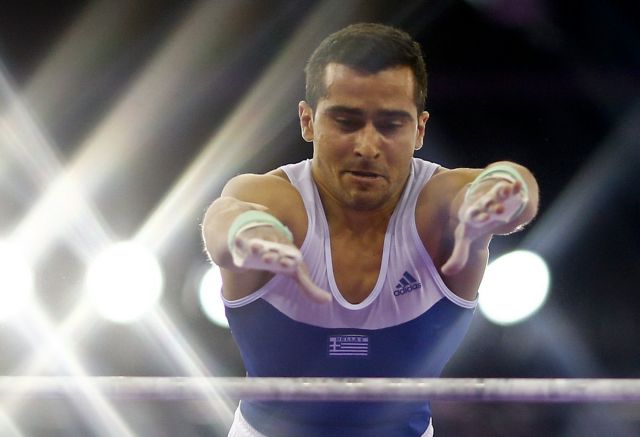
Vlasios Maras became the first Greek gymnast to win an individual world title. He took horizontal bar gold at the 2001 World Championships at just 18 years old.
Then he built a career spanning four Olympic Games and 15 years at the top level. He added a second world title in 2006 and collected five European Championship golds on his signature apparatus. The Greek sports community named him 2009 Male Athlete of the Year.
Olympic medals never came his way. At his home Athens 2004 Games, he was the local favorite on horizontal bar but finished 13th in qualification. He continued through three more Olympics and kept competing at World and European events.
Two world titles and five European golds make him one of the most decorated horizontal bar specialists ever, even without an Olympic medal.
7. Yuri van Gelder (Netherlands): Age 33
| Category | Detail |
|---|---|
| Born | April 20, 1983 |
| Age at Last Olympics | 33 (Rio 2016) |
| Olympic Appearances | 1 (2016) |
| Discipline | Rings |
| Olympic Medals | None (qualified for final, then expelled from team) |
| World Championship Medals | Gold (2005), silver (2007), bronze (2006) |
Sources: Wikipedia, CNN, Washington Post
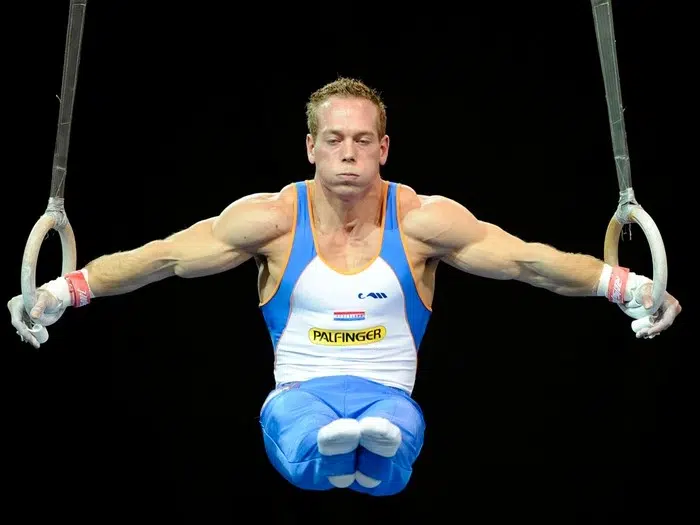
Yuri van Gelder earned the nickname “Lord of the Rings” for his strength and control on the still rings. He won both the World Championship and European Championship on rings in 2005.
A cocaine suspension in 2009 blocked his path to the London 2012 Olympics. After rehab and years of comebacks, he qualified for Rio 2016 at age 33. He reached the rings final. Everything pointed toward a redemption story.
Then he wrecked it. Van Gelder left the Olympic Village after qualifying, drank alcohol, and did not return until the next morning. The Dutch Olympic Committee sent him home. Dutch media renamed him “Lord of the Drinks.”
His talent was real. Three World Championship medals and a 15-year career at the highest level prove that. But one night of bad judgment erased his only Olympic opportunity.
8. Harutyun Merdinyan (Armenia): Age 33
| Category | Detail |
|---|---|
| Born | November 5, 1982 |
| Age at Last Olympics | 33 (Rio 2016) |
| Olympic Appearances | 1 (2016) |
| Discipline | Pommel horse |
| Olympic Result | 7th place in final |
| Major Medals | European Championship gold (2016), World Championship bronze (2015, 2022) |
| Career Span | 1999-2022 (23 years) |
Sources: FIG, Olympics.com, European Gymnastics
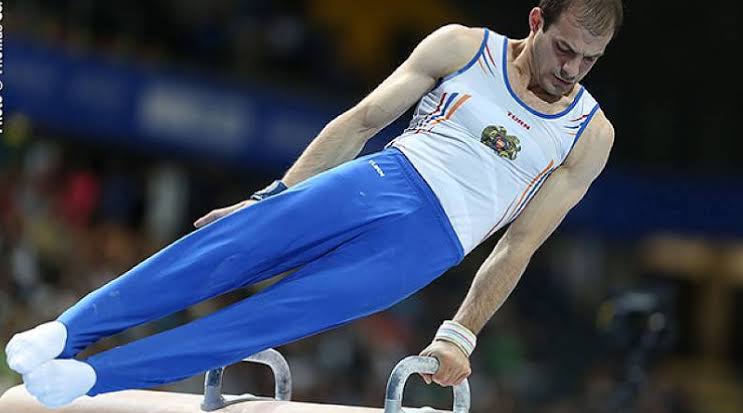
Harutyun Merdinyan built one of the longest competitive careers in modern gymnastics. He competed at the top level for 23 years, from 1999 to 2022.
The pommel horse demands perfect timing and exceptional upper-body endurance. Merdinyan mastered it. He won European Championship gold in 2016 and earned World Championship bronze medals in both 2015 and 2022. The seven-year gap between those World medals highlights his consistency.
At Rio 2016, Merdinyan reached the pommel horse final and placed seventh. He was 33 years old. He kept competing for six more years after that. His second World bronze came in 2022 at age 39, which makes him one of the oldest World Championship medalists in recent gymnastics history.
9. Ri Se-gwang (North Korea): Age 31
| Category | Detail |
|---|---|
| Born | January 21, 1985 |
| Age at Last Olympics | 31 (Rio 2016) |
| Olympic Appearances | 1 (2016) |
| Discipline | Vault |
| Olympic Medals | Gold (vault, 2016) |
| World Championship Golds | 3 (2014, 2015, 2018) |
| World Championship Bronze | 1 (2007) |
Sources: Olympics.com, NBC Sports, Washington Post, Wikipedia
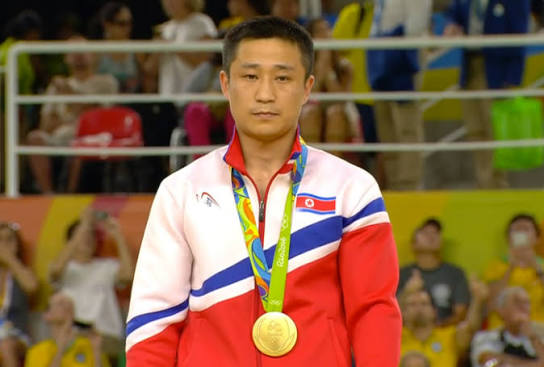
Ri Se-gwang won Olympic gold on vault at Rio 2016 at age 31. That made him the oldest Olympic gymnastics champion since 1968. Most vault gold medalists are in their early twenties.
His path to the Olympics hit a wall for years. North Korea’s gymnastics federation received a ban from the London 2012 Games due to age falsification. By the time Ri reached Rio, he was a two-time World Champion with a vault named after him.
Both vaults he performed in the Rio final carried his name. He scored an average of 15.691 to beat Russia’s Denis Ablyazin by one-tenth of a point. He became only the second North Korean male gymnast to win Olympic gold, after Pae Gil-su took pommel horse at Barcelona 1992.
Ri won a third World Championship gold in 2018 and retired in 2020 at age 35. He remains the only gymnast who owns two of the five most difficult vaults in the FIG Code of Points.
10. Larisa Latynina (Soviet Union): Age 29
| Category | Detail |
|---|---|
| Born | December 27, 1934 |
| Age at Last Olympics | 29 (Tokyo 1964) |
| Olympic Appearances | 3 (1956, 1960, 1964) |
| Discipline | All-around |
| Olympic Medals | 18 total (9 gold, 5 silver, 4 bronze) |
| Combined Olympic/World/European Medals | 46 total (25 gold, 15 silver, 6 bronze) |
Sources: Olympics.com, Britannica, Olympedia
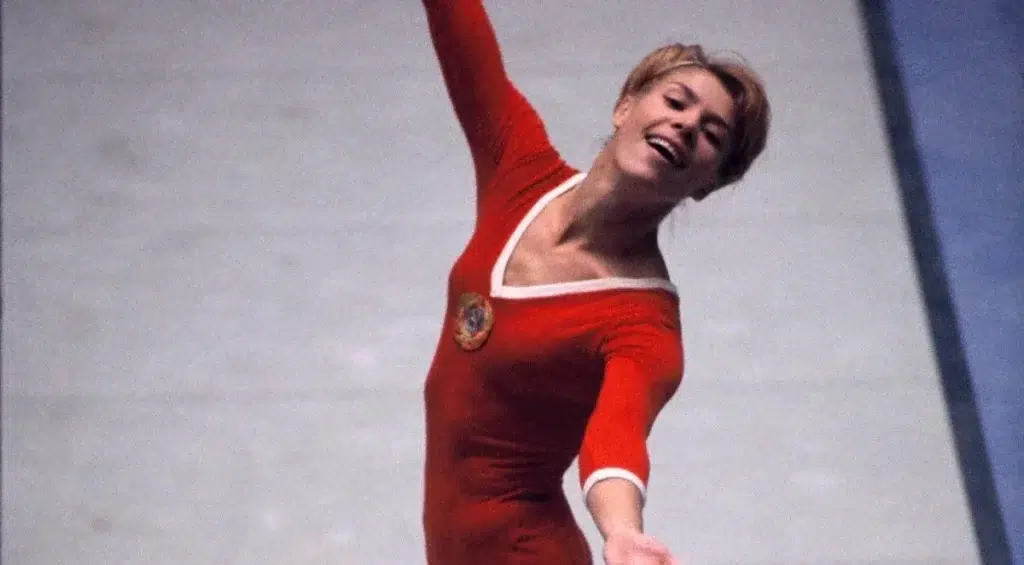
Twenty-nine sounds young by modern standards. But in the 1960s, 29 was old for a female gymnast. The sport retired athletes much earlier then. Latynina kept winning anyway.
Her numbers still shock. Eighteen Olympic medals. Nine of them gold. Her total medal record stood for 48 years until Michael Phelps broke it at London 2012. Her record for individual Olympic event medals (14) still stands today.
She won five World Championship titles at the 1958 Worlds while four months pregnant. That is a verified fact, not an exaggeration.
At the Tokyo 1964 Olympics, experts expected her to slow down. She won six medals instead, including two more golds on floor exercise and in the team event. She retired after the 1966 World Championships and coached the Soviet national team. Under her coaching, the Soviet women won team gold at the 1968, 1972, and 1976 Olympics.
Latynina attended the 2012 London Games and applauded Michael Phelps when he broke her record. She remains the most decorated female Olympian in history across all sports.
Age Rules for Olympic Gymnastics
The International Gymnastics Federation (FIG) sets a minimum age of 16 for Olympic artistic gymnastics. Athletes must turn 16 during the calendar year of the Games.
No maximum age limit exists. Any gymnast who qualifies through World Championships, continental championships, or World Cup events can compete. Chusovitina’s ongoing career at 50 is the most extreme proof.
The FIG raised the minimum age from 14 to 15 in 1981 and then to 16 in 1997. The rule protects young athletes from the physical and emotional pressure of elite competition.
What Keeps Older Gymnasts Competitive?
Apparatus specialization plays the biggest role. Gymnasts like Chusovitina (vault), Yovtchev (rings), and Maras (horizontal bar) train one or two events instead of the full all-around. This reduces overall wear on their bodies.
Better recovery science helps too. Personalized nutrition, advanced physical therapy, and smarter training schedules let athletes manage their bodies more effectively than past generations.
Experience fills gaps that youth leaves open. Older gymnasts execute cleaner routines because they have performed thousands more repetitions. They handle competition pressure better. A 33-year-old who has competed at three World Championships knows how to manage nerves in ways a first-time 16-year-old does not.
Conclusion: Oksana Chusovitina at Age 46 Is the Oldest Olympic Gymnast in History
Gymnastics does not belong to teenagers alone. Chusovitina proved that at 46. Savolainen proved it at 44, decades before modern training methods existed. Dragulescu and Yovtchev proved it across five and six Olympic Games.
The standout number from this list: Chusovitina won a silver medal at a World Challenge Cup event on her 50th birthday in 2025. She started competing at the Olympics in 1992. That adds up to a competitive gymnastics career of more than three decades.
I think Chusovitina changed how we see aging in sports. She competes because she loves it, not because she has anything left to prove. Whether she makes it to LA 2028 or not, her record will stand for a very long time.