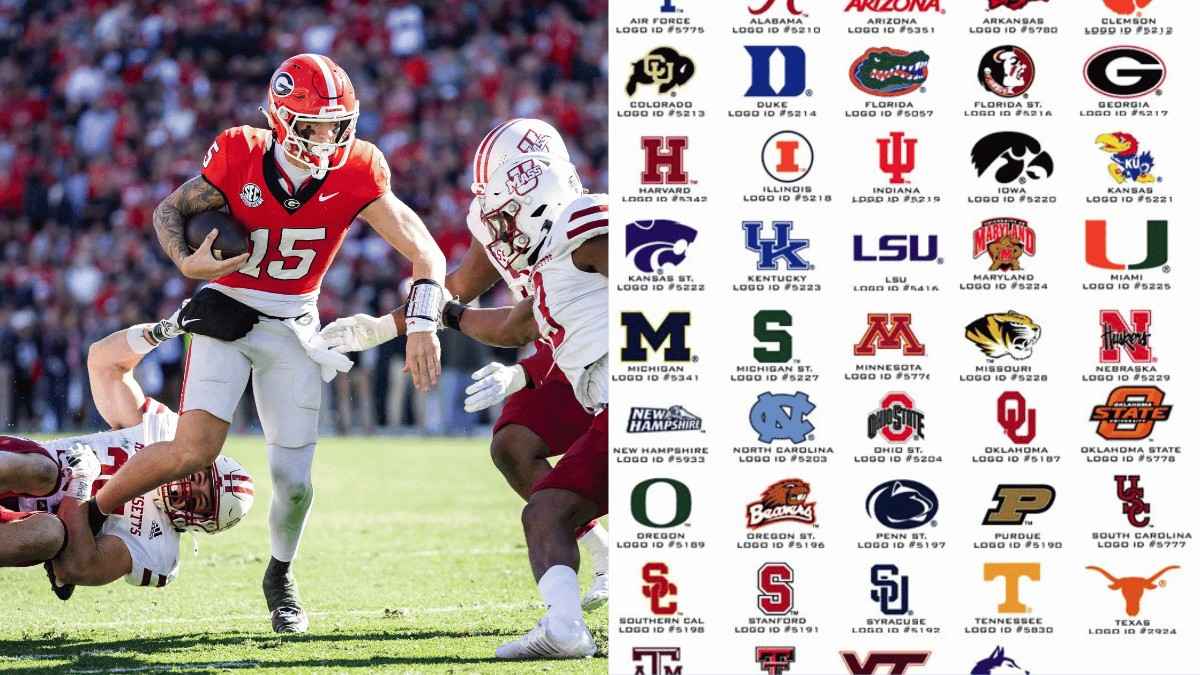
More than 130 FBS college football teams compete across 10 conferences and 2 independents heading into the 2026 season. The sport just went through one of the most chaotic realignment cycles in NCAA history. Conferences poached, rebuilt, and reshuffled rosters of schools from coast to coast.
This guide breaks down every FBS conference, the teams in each one, and the biggest roster shakes that changed the map. I’ve tracked every confirmed move, so you don’t have to piece it together from five different sources.
All College Football Teams by Conference (2026 Quick Reference)
Here’s a snapshot of every FBS conference for the 2026 season with team counts and a standout program from each.
| Conference | Teams | Notable Program | Key Venue |
|---|---|---|---|
| SEC | 16 | Georgia Bulldogs | Sanford Stadium (92,746) |
| Big Ten | 18 | Ohio State Buckeyes | Ohio Stadium (102,780) |
| Big 12 | 16 | Colorado Buffaloes | Folsom Field (50,183) |
| ACC | 17 | Clemson Tigers | Memorial Stadium (81,500) |
| Pac-12 | 8 | Boise State Broncos | Albertsons Stadium (36,387) |
| American | 14 | Army Black Knights | Michie Stadium (38,000) |
| Mountain West | 10 | North Dakota State Bison | SHAC / Gate City Bank Field (19,000) |
| Sun Belt | 13 | James Madison Dukes | Bridgeforth Stadium (25,000) |
| MAC | 13 | Toledo Rockets | Glass Bowl (26,248) |
| Conference USA | 11 | Liberty Flames | Williams Stadium (25,000) |
| FBS Independents | 2 | Notre Dame Fighting Irish | Notre Dame Stadium (77,622) |
The Big Ten leads all conferences with 18 member schools. The rebuilt Pac-12 is the smallest with 8 football-playing programs. The SEC and Big 12 both sit at 16 apiece.
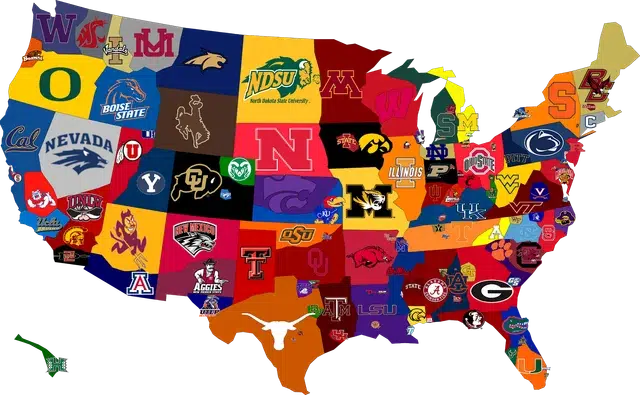
Power Four Conferences
The Power Four conferences are the SEC, Big Ten, Big 12, and ACC. These four leagues carry the most revenue, the biggest TV deals, and the strongest paths to the 12-team College Football Playoff.
SEC (16 Teams)
The SEC features 16 teams after adding Texas and Oklahoma ahead of the 2024 season. That addition turned a historically dominant conference into an absolute gauntlet.
| Team | Location | Stadium |
|---|---|---|
| Alabama Crimson Tide | Tuscaloosa, AL | Bryant-Denny Stadium |
| Arkansas Razorbacks | Fayetteville, AR | Razorback Stadium |
| Auburn Tigers | Auburn, AL | Jordan-Hare Stadium |
| Florida Gators | Gainesville, FL | Ben Hill Griffin Stadium |
| Georgia Bulldogs | Athens, GA | Sanford Stadium |
| Kentucky Wildcats | Lexington, KY | Kroger Field |
| LSU Tigers | Baton Rouge, LA | Tiger Stadium |
| Mississippi State Bulldogs | Starkville, MS | Davis Wade Stadium |
| Missouri Tigers | Columbia, MO | Faurot Field |
| Oklahoma Sooners | Norman, OK | Gaylord Family Stadium |
| Ole Miss Rebels | Oxford, MS | Vaught-Hemingway Stadium |
| South Carolina Gamecocks | Columbia, SC | Williams-Brice Stadium |
| Tennessee Volunteers | Knoxville, TN | Neyland Stadium |
| Texas A&M Aggies | College Station, TX | Kyle Field |
| Texas Longhorns | Austin, TX | Darrell K Royal Stadium |
| Vanderbilt Commodores | Nashville, TN | FirstBank Stadium |
Georgia has been the SEC’s standard-bearer in recent seasons with back-to-back national championships in 2022 and 2023. Texas, Alabama, and LSU remain perennial contenders. The addition of Oklahoma and Texas made the conference’s already brutal schedule even tougher.
Big Ten (18 Teams)
The Big Ten is the largest FBS conference with 18 teams after absorbing UCLA, USC, Oregon, and Washington from the old Pac-12 ahead of the 2024 season.
| Team | Location |
|---|---|
| Illinois Fighting Illini | Champaign, IL |
| Indiana Hoosiers | Bloomington, IN |
| Iowa Hawkeyes | Iowa City, IA |
| Maryland Terrapins | College Park, MD |
| Michigan Wolverines | Ann Arbor, MI |
| Michigan State Spartans | East Lansing, MI |
| Minnesota Golden Gophers | Minneapolis, MN |
| Nebraska Cornhuskers | Lincoln, NE |
| Northwestern Wildcats | Evanston, IL |
| Ohio State Buckeyes | Columbus, OH |
| Oregon Ducks | Eugene, OR |
| Penn State Nittany Lions | University Park, PA |
| Purdue Boilermakers | West Lafayette, IN |
| Rutgers Scarlet Knights | Piscataway, NJ |
| UCLA Bruins | Pasadena, CA |
| USC Trojans | Los Angeles, CA |
| Washington Huskies | Seattle, WA |
| Wisconsin Badgers | Madison, WI |
Ohio State won the 2024 national championship and remains the Big Ten’s marquee brand alongside Michigan. Oregon brought a high-powered offensive identity to the conference. The coast-to-coast footprint now stretches from Rutgers in New Jersey to USC in Los Angeles.
I think the Big Ten’s expansion into the West Coast changed the sport more than people realize. Travel logistics alone make this a completely different conference than the one I grew up watching.
Big 12 (16 Teams)
The Big 12 has 16 teams after absorbing four former Pac-12 schools (Arizona, Arizona State, Colorado, Utah) plus Cincinnati, Houston, UCF, and BYU in recent cycles.
| Team | Location |
|---|---|
| Arizona Wildcats | Tucson, AZ |
| Arizona State Sun Devils | Tempe, AZ |
| Baylor Bears | Waco, TX |
| BYU Cougars | Provo, UT |
| Cincinnati Bearcats | Cincinnati, OH |
| Colorado Buffaloes | Boulder, CO |
| Houston Cougars | Houston, TX |
| Iowa State Cyclones | Ames, IA |
| Kansas Jayhawks | Lawrence, KS |
| Kansas State Wildcats | Manhattan, KS |
| Oklahoma State Cowboys | Stillwater, OK |
| TCU Horned Frogs | Fort Worth, TX |
| Texas Tech Red Raiders | Lubbock, TX |
| UCF Knights | Orlando, FL |
| Utah Utes | Salt Lake City, UT |
| West Virginia Mountaineers | Morgantown, WV |
Arizona State made the 2024 College Football Playoff, proving the Big 12’s expanded roster can compete at the highest level. Colorado’s return under Deion Sanders brought massive national attention. The conference now spans from West Virginia to Arizona, covering 4 time zones.
ACC (17 Teams)
The ACC holds 17 football programs after landing Cal, Stanford, and SMU from the former Pac-12 and American conferences ahead of 2024.
Key members include Clemson, Miami, Florida State, Louisville, Pittsburgh, SMU, North Carolina, Duke, Virginia Tech, Syracuse, NC State, Boston College, Georgia Tech, Stanford, Cal, Virginia, and Wake Forest.
Clemson remains the ACC’s flagship football program with multiple playoff appearances over the past decade. Miami has reemerged as a national contender. SMU hit the ground running in its first ACC season and made the 2024 CFP.
Group of Six Conferences
The Group of Six includes the American, Pac-12 (rebuilt), Mountain West, Sun Belt, MAC, and Conference USA. These leagues receive one automatic CFP bid for the highest-ranked Group of Six champion.
Pac-12 (8 Football Teams)
The rebuilt Pac-12 fields 8 football programs for 2026 after nearly dissolving in 2024. Five former Mountain West schools, plus Texas State from the Sun Belt, joined holdovers Oregon State and Washington State.
The full 2026 Pac-12 football lineup: Boise State, Colorado State, Fresno State, Oregon State, San Diego State, Texas State, Utah State, and Washington State.
Boise State is the marquee addition. The Broncos made the 2024 CFP and bring the conference instant credibility. Oregon State and Washington State fought through two years of uncertainty to keep the Pac-12 alive, which is one of the wildest survival stories in college sports history.
American Athletic Conference (14 Teams)
The American has 14 teams and stayed stable despite heavy Pac-12 recruiting efforts. Memphis, USF, UTSA, and Tulane all turned down Pac-12 invitations and committed to the conference.
Members: Army, Charlotte, East Carolina, FAU, Memphis, Navy, North Texas, Rice, South Florida, Temple, Tulane, Tulsa, UAB, and UTSA.
Army joined ahead of 2024 and immediately strengthened the conference’s brand. The Army-Navy game remains one of college football’s most iconic annual matchups. Memphis and Tulane are the conference’s top on-field competitors.
Mountain West (10 Teams)
The Mountain West has 10 teams after a turbulent rebuild. The conference lost five schools to the Pac-12, then added UTEP (from CUSA), Northern Illinois (from MAC), and the 10-time FCS champion North Dakota State Bison.
Full 2026 roster: Air Force, Hawai’i, Nevada, New Mexico, North Dakota State, Northern Illinois, San Jose State, UNLV, UTEP, and Wyoming.
North Dakota State’s jump to FBS is the biggest story here. The Bison dominated the FCS with 10 national titles between 2011 and 2024. They won’t be eligible for the CFP until 2028 under current bylaws, but they’re already one of the most intriguing programs to watch.
Sun Belt Conference (13 Teams)
The Sun Belt has 13 teams after losing Texas State to the Pac-12. Louisiana Tech is expected to join from CUSA, though the exact timing remains subject to ongoing legal proceedings.
Current members: Appalachian State, Arkansas State, Coastal Carolina, Georgia Southern, Georgia State, James Madison, Louisiana, Marshall, Old Dominion, South Alabama, Southern Miss, Troy, and UL Monroe.
James Madison has been the Sun Belt’s breakout program since moving up from the FCS. App State remains the conference’s most consistent brand nationally, largely thanks to that legendary 2007 upset of Michigan.
MAC (13 Teams)
The Mid-American Conference has 13 teams for 2026. Northern Illinois left for the Mountain West, but the MAC added Sacramento State as a football-only member from the FCS.
Full roster: Akron, Ball State, Bowling Green, Buffalo, Central Michigan, Eastern Michigan, Kent State, Massachusetts, Miami (OH), Ohio, Sacramento State, Toledo, and Western Michigan.
Sacramento State paid approximately $23 million in fees to make the FCS-to-FBS jump. Toledo and Miami (OH) have been the MAC’s most competitive programs in recent seasons. The conference remains famous for its Tuesday and Wednesday night games.
Conference USA (11 Teams)
Conference USA has 11 teams heading into 2026, though Louisiana Tech’s potential departure to the Sun Belt could drop that number.
Current members: Delaware, FIU, Jacksonville State, Kennesaw State, Liberty, Louisiana Tech (status pending), Middle Tennessee, Missouri State, New Mexico State, Sam Houston, and Western Kentucky.
CUSA has been the primary landing spot for FCS-to-FBS transitions. Delaware, Missouri State, Kennesaw State, Jacksonville State, and Sam Houston all joined the conference after moving up from FCS football within the last four years.
FBS Independents
Only 2 FBS teams remain independent of any conference: Notre Dame and UConn.
Notre Dame is the gold standard of independence. The Fighting Irish play in the ACC for all sports except football and have an annual NBC broadcasting deal. Their path to the CFP runs through a national schedule with no conference championship game.
UConn has been independent since leaving the American after the 2019 season. The Huskies are widely considered a candidate for future conference membership.
2026 Realignment Changes at a Glance
Here’s a quick summary of every team that changed conferences for the 2026 season.
| Team | From | To |
|---|---|---|
| Boise State | Mountain West | Pac-12 |
| Colorado State | Mountain West | Pac-12 |
| Fresno State | Mountain West | Pac-12 |
| San Diego State | Mountain West | Pac-12 |
| Utah State | Mountain West | Pac-12 |
| Texas State | Sun Belt | Pac-12 |
| UTEP | Conference USA | Mountain West |
| Northern Illinois | MAC | Mountain West |
| North Dakota State | FCS (MVFC) | Mountain West |
| Sacramento State | FCS (Big Sky) | MAC |
| Louisiana Tech | Conference USA (pending) | Sun Belt (pending) |
The Pac-12’s rebuild is the headline. A conference that lost 10 of 12 members in 2024 came back with 8 football schools by 2026. Not many saw that coming.
How Conference Membership Affects the College Football Playoff
The 12-team College Football Playoff gives automatic bids to the four Power Four conference champions and the highest-ranked Group of Six champion. Seven at-large spots fill out the bracket.
Conference membership directly impacts a team’s CFP path. Power Four teams get more chances at ranked wins, which boosts their resume. Group of Six teams need to run the table or come close.
In my view, the gap between Power Four and Group of Six keeps widening. But programs like Boise State proved in 2024 that it’s not impossible to break through.
Conclusion: More Than 130 FBS Teams Play Across 10 Conferences and 2 Independents in 2026
The 2026 college football map looks nothing like it did three years ago. The Pac-12 rebuilt from the ground up. The Mountain West added a 10-time FCS champion. Two programs jumped from FCS to FBS.
The SEC and Big Ten remain the sport’s two most powerful conferences, combining for 34 teams. But the Big 12 and ACC are right behind, and the Group of Six continues to produce CFP-caliber programs.
Whether you follow a powerhouse or a mid-major, the 2026 season will be the first where every major realignment move is finally in place. And that alone makes it worth watching.